


So you’re thinking about learning AWS and maybe even taking an AWS exam, but you’re worried about your job prospects because you don’t have a lot of experience in IT, or maybe you don’t have a degree. Sound about right?
AWS is daunting, I know—there are hundreds of AWS services and a lot to learn. I know that feeling of overwhelm you’re probably feeling right now! But I’m excited, because today, we’ll break down this big AWS topic, and you should leave today with a better sense of what to focus on.
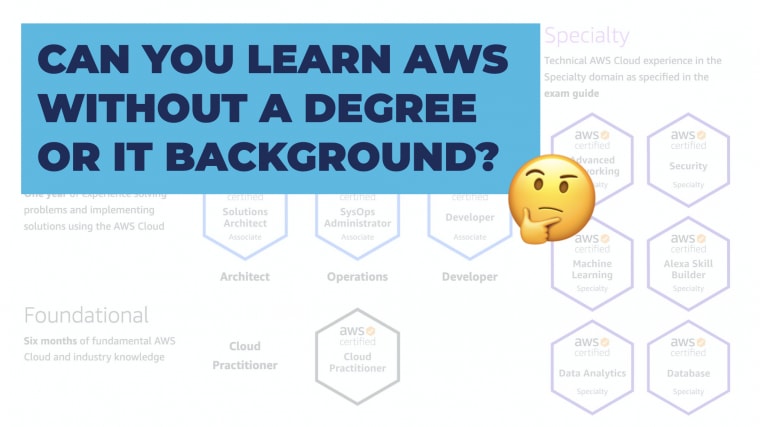
Can you learn AWS without experience? Yes. It’s possible to learn AWS and get certified without an IT background or degree, provided the necessary training hours are completed. The most approachable AWS exams are the “cloud practitioner” or the “associate” exams. Landing an entry-level job using AWS with minimal experience can be challenging, but is possible.
As we might not have met, let me introduce myself: I’m Lou, a professional software engineer who has worked with the cloud and AWS for nearly a decade. It’s my ambition to make the cloud easier to understand and break into.
I’ve written a lot on the topic of AWS careers and certifications, everything from How Much Do AWS Certifications Cost? Including All The Extras to Best Resources For AWS Certifications: An Extensive & Opinionated Guide (So You Pass The First Time!). An article I wrote last year: Where (And How) to Start Learning AWS as a Beginner was read by nearly 30,000 people so far.
But, that’s enough about me, let’s get back to the topic at hand, and let me answer your question about whether you can learn AWS without experience!
Learning AWS: How We’ll Break It Down
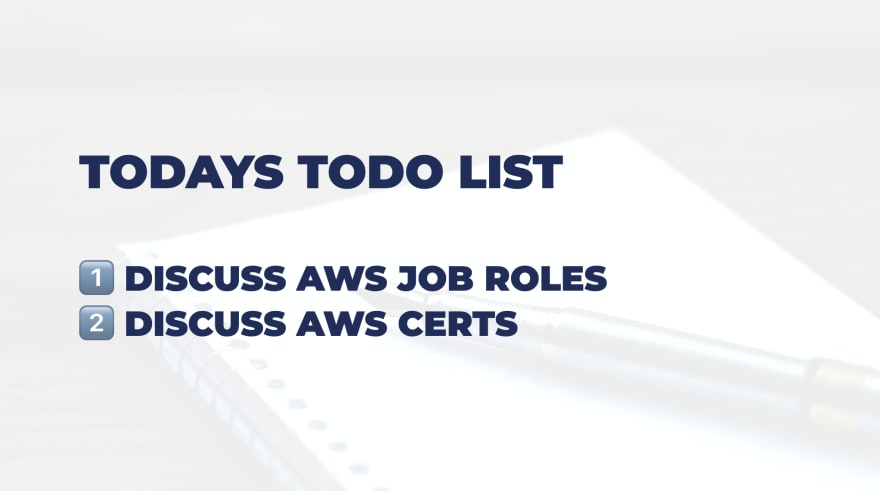
Since there’s a lot to cover today I think it’s best if I give you an overview of exactly how we’ll approach todays topic before get lost in the details.
Firstly, I’m guessing you want to learn AWS to land a job, right? If that’s the case, we’ll need to start by reviewing the different job roles that exist for people with AWS skills, and discuss which of those roles makes sense for someone without experience. We’ll get into this in just a moment.
After we’ve discussed about job roles and which might make sense for you, we’ll then turn our attention to AWS certifications, and how relevant certifications are to the job hunt, especially for a beginner. By the end of the article, you should have a clear idea of your direction for learning AWS.
If that sounds good, since there is a lot to cover, let’s get right into it.
What Is AWS? What Can You Do With It?
Now I know that a few of you reading this might not have a lot of context on what AWS is, so let’s begin by quickly re-capping what AWS is.
AWS is a huge cloud computing platform that can be used for a range of different use-cases: you can use AWS Elastic Cloud Compute (EC2) to set up a server to host a website, use Route53 to buy and attach a domain name or use S3 to host images, and a lot, lot more. But we’re only scratching the surface of AWS here, there are so many industries and positions working with AWS.

AWS is used by all manner of different companies in every industry, from the government to gaming. It’s the computing powerhouse that drives the technology behind many modern companies, and AWS is growing fast.
Right now, AWS couldn’t be a better choice. AWS has been for many years—and continues to be—the market leader between all the cloud platforms. Whilst the competitors like GCP and Azure are catching up, they’ve still not toppled AWS which continues to be, by far, the biggest cloud provider.
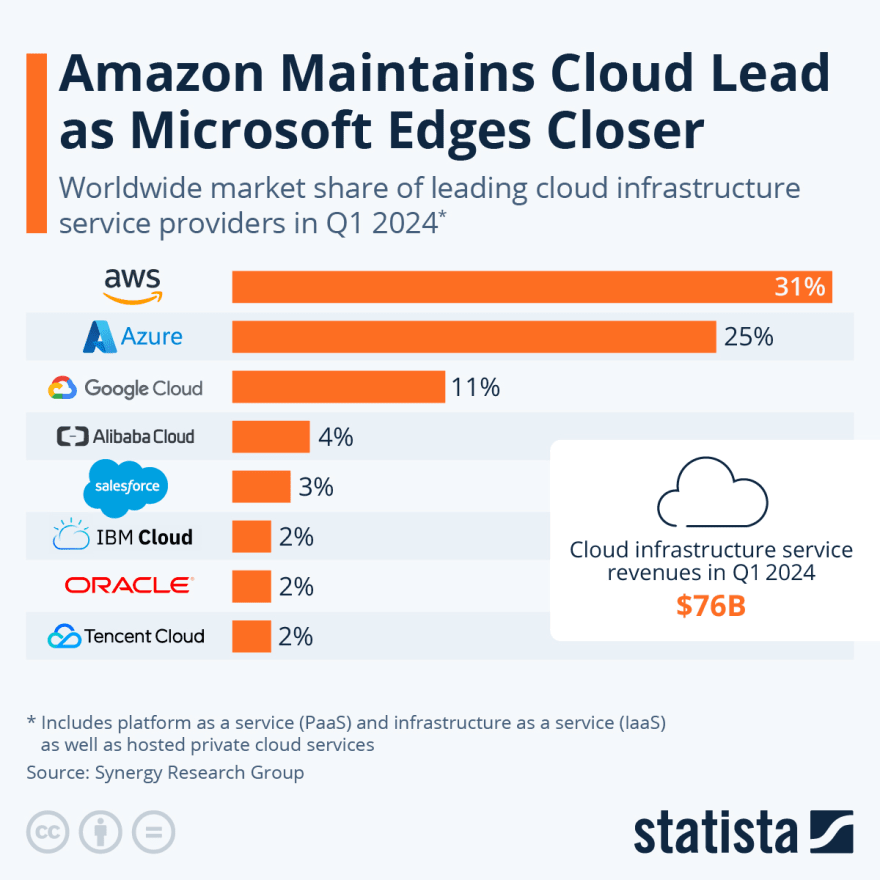 Source: Statista
But, it’s not just about whether you can learn AWS. The real challenge is whether you can use learn AWS AND land a first job, right? Because I’m guessing you’re not just learning AWS purely for the fun of it.
So, as I said at the start, I suggest we begin our conversation looking at the different job roles that exist for people with AWS skills, and the experience required for these roles.
What Are Some Roles That Work With AWS?
Let me be frank with you: there’s no such thing as an “AWS” job. There are indeed many different jobs which involve AWS, but there’s no job that is just “AWS”. Businesses are using AWS to achieve their business goal, and these businesses hire into positions that use AWS to help achieve those goals.
With this in mind, let’s go through three example job roles that work with AWS, and let’s discuss: the required knowledge of AWS you’d need for that role, the difficulty of finding an entry-level position, AWS services related to the role, and a suggested AWS certificate.
Disclaimer: I’m going to make some generalizations here. The generalizations are based on my experience; there will always be exceptions and the experience of others might not fit perfectly into these definitions. But let’s not let the difficulty of putting roles into precise boxes discourage us.
Let’s start with the front-end engineer…
AWS Role 1: Front-End Engineer
A front-end engineer typically works on the user interfaces or “front-end” of a software application, such as a browser (like chrome or safari). Typically this role is collaborating with decision-makers of the product they’re building, the products teams, and UI/UX teams (if the company has them).
The front-end role is often (but not always) quite creative, and visual, a good entry point for those with experience or enthusiasm for graphic design, and human-machine interfaces, it’s a fairly user-oriented role.
What about AWS? The interactions of a front-engineer with AWS are usually minimal. Only in certain environments would a front-end engineer be exposed to much of the infrastructure on AWS. So whilst AWS is a useful skill for a front-end engineer, it’s not the main skill for front-end engineers to prioritize.
That said, an entry-level position as a front-end role engineer could expose you to different aspects of AWS (granted, probably less than other types of roles) but this role could allow you to build experience and jump into the cloud from there. Personally, I started my career as a front-end focussed software engineer.
- Required knowledge of AWS (low/medium/high)? Low.
- Difficult for entry-level positions (low/medium/high)? Low.
- AWS services: S3, CloudFront, Route53, AWS Amplify, AWS Cognito.
- AWS certificate: AWS Certified Developer Associate.
AWS Role 2: Back-End Engineer
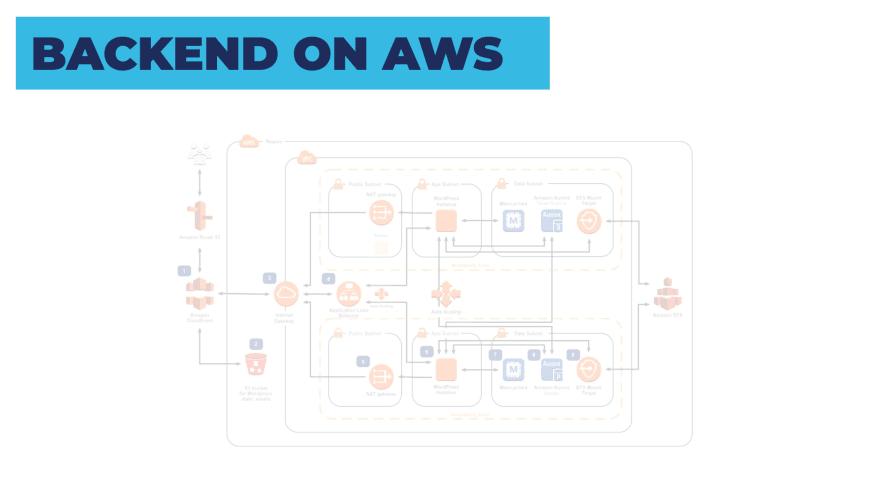
The back-end engineer, in contrast to the front-end engineer, will typically work a lot with AWS. The back-end engineer is often hands-on in building the APIs and back-office systems that often don’t have any user-facing interfaces. The back-end role deals a lot with data e.g. moving data and storing data.
Comparatively to a front-end engineer, the back-end engineer also has some architectural considerations to make, for instance, back-end engineers have to ensure that software is appropriately scalable and secure.
- Required knowledge of AWS (low/medium/high)? Medium.
- Difficult for entry-level positions (low/medium/high)? Medium.
- AWS services: S3, CloudFront, Route53, AWS Amplify, AWS Cognito.
- AWS certificate: AWS Certified Developer Associate.
AWS Role 3: SRE / Cloud / DevOps
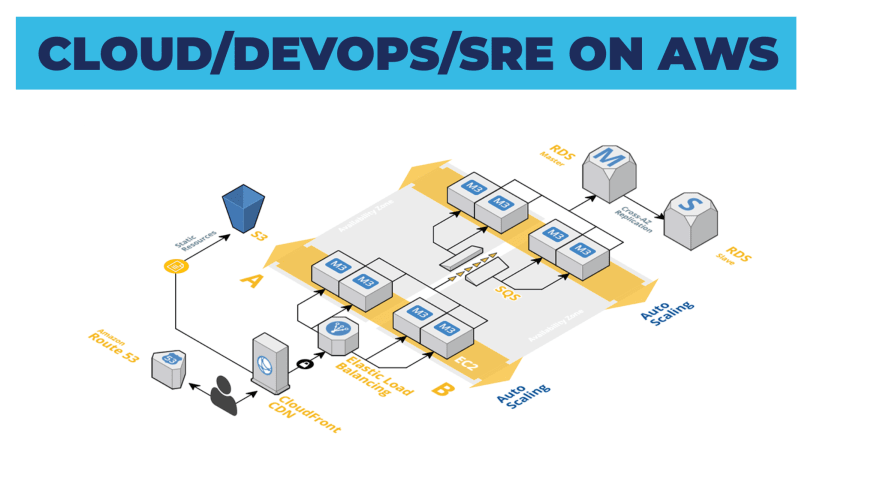
An SRE (Site Reliability Engineer) is usually responsible for ensuring site reliability. In real terms, this means avoiding prolonged periods of downtime for applications. An SRE’s main skillset is around things like monitoring, logging, alerts, incident response, and setting service level objectives. To do a good job, an SRE needs fundamental knowledge of AWS.
A cloud engineer, on the other hand, typically works heavily with AWS, often doing minimal work that would be considered developer or “feature” work. A cloud engineer is often responsible for helping with core parts of the AWS infrastructure, such as the account setup and billing.
Lastly, the most difficult (and contentious) role to define is the “DevOps” engineer. The DevOps role is usually a catch-all term for an engineer doing a range of different tasks that span development, system administration, SRE type work, and some cloud work, etc.
I group these three roles together as they all require a similar, deep knowledge of AWS and cloud systems to perform their job effectively. Generally speaking, I wouldn’t recommend these roles to someone with no existing IT background or experience. There are some exceptions to this advice, but do proceed with caution here, as the skills required can often be quite advanced.
- Required knowledge of AWS (low/medium/high)? High.
- Difficult for entry-level positions (low/medium/high)? High.
- AWS services: S3, IAM, CloudWatch, CloudFormation, EC2, RDS.
- AWS certificate: SysOps Administrator / DevOps Professional.
Hopefully, these role overviews give you some idea of the different roles that work with AWS. Maybe you see yourself fitting into one of the roles I mentioned better than another?
As I said at the start, there’s no role that’s just “AWS”, so when you’re thinking about your job search: research and understand your target job role upfront.
Now, at this point, you could be wondering: “but, are these the only roles with AWS?”. And the short answer is no, but let me dig into that with you now.
How To Find The Perfect AWS Role

So there are a lot of roles within AWS that I didn’t mention today. How come? Well, partly because the article could go on forever, and partly because these roles are just to give you an idea of what’s out there. The reality is: there are many opportunities that don’t neatly fit into a role/job description box like this.
For example, there are also: software architects, quality assurance, security, support roles, and some are mixes of everything in between, or sometimes blended with other skillsets like writing, e.g. for technical writer positions.
I suggest you spend some time finding job descriptions that stand out to you, whilst taking note and spotting patterns in skills and tech mentioned. You should also consider any overlap with your existing skills and interests.
If you’ve got an affinity for design, a front-end role might make sense. If you’ve worked in support-type roles before, maybe a support role could work for you. If you’ve got an eye for detail, maybe a QA role makes the most sense.
The main take-home point here is that there’s no such thing as an “AWS” role. Instead, you should be focusing your job hunt on a specific role that uses AWS.
For now, let’s put down the topic of roles (we’ll come back to it again later) and switch gears to discuss certifications and how they impact finding a job with little or no experience.
Are AWS Certifications Important For AWS Job Hunters?

If you’ve been on the job hunt for a cloud job for more than five minutes, you’ll have undoubtedly found yourself reading about cloud certifications. So I don’t think today’s discussion about whether you can learn AWS with little or no experience would be complete if we didn’t at least discuss them!
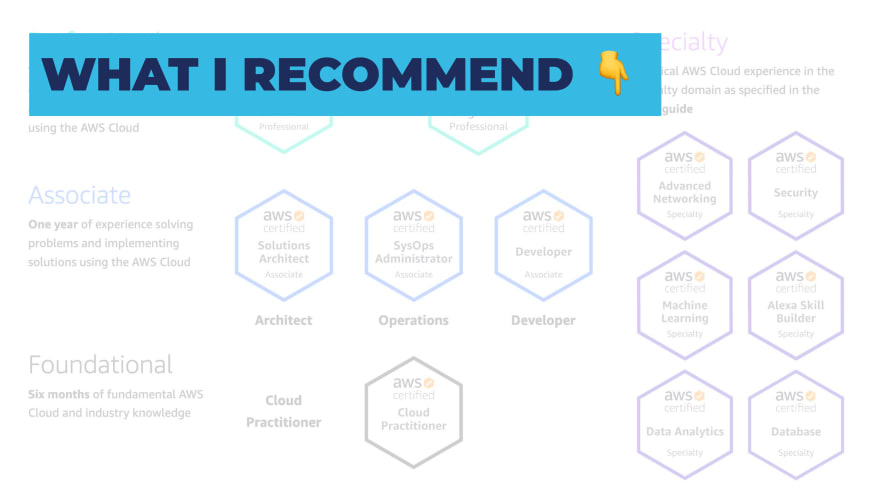
Firstly, what are the AWS certifications? The AWS certifications are a series of different qualifications that anyone can take to showcase certain skills on AWS. The certifications aren’t too expensive or exclusive. The lower level exams cost about ~100 USD to sit the exam, just to give you a rough idea.
On this note, if you’re interested in the financial side of AWS certifications, I’ve covered that whole topic in depth before: How Much Do AWS Certifications Cost? Including All The Extras which is worth checking out.
But the real question here is not what the certifications are, but should you take an AWS exam as a beginner? Let’s dig in, and answer that question now.
Should You Take An AWS Certification As Someone With No Experience?

In my opinion: Yes, absolutely.
The main way that certifications help in the job hunt is by getting you past the first resume/CV screen. I mention this because the right certification(s) is the one that gets you past this first stage. Beyond the first interview screen, you’ll need to rely on your learned skills and ability in interviews.
But my reasoning for why certifications matter is less about the fact that they can help you pass resume/CV screening, which they can. But more important is the fact that getting a certification will give you that confidence in your own abilities with AWS when you’re applying for jobs and doing the interviews.
That said, what matters more than the certifications is what we discussed first today: roles. The most important area to focus on is choosing a role that compliments your existing skills and builds a compelling “story” around your skills and why you’d be a perfect fit for that role. Part of that story can be a certification, but the certification must make sense given the role.
Okay, so we’ve talked a fair amount today about the different types of roles, and we’ve also talked about AWS certifications, what the certifications are, and some of the advantages. I think it’s also important though that you leave today with a clear plan and direction for your next steps. So what should those be?
What Steps Should You Take To Learn AWS And Get Into Cloud?
Step 1: Understand the AWS role that you want
As we discussed, the first step to take is to start to understand the different roles that make sense for you around AWS. We’ve talked about some today, so use that as your starting point. But you should also go to job boards and start to take some notes of the different role titles and skills that are required.
If you can, join some meetups or events and chat with participants, ask them what they do, ask them their job titles, and ask them about how they got started. If you’re struggling for events, you can try even reaching out on social media, LinkedIn and Twitter are great for this.
I have in the past talked about some different communities that I personally like, so if you’re really stuck of a place to go where you can ask people these questions why not start there? Best Online Communities For Cloud Engineers (Forums, Chats & More).
Ultimately you need to get a clear picture of the specific type of role that you want within the cloud and start to understand the types of skills that are involved. Once you’ve got that clear picture of the type of role you want, you can start to build a plan around the skills. Let’s talk about how you’d do that!
Step 2: Make a plan to build your AWS skills
Once you know the role that you’re after, you can start to build a plan for your skills. You have a few choices for structuring your approach here.
You can fashion a curriculum yourself from content online. Or you can use an online platform such as acloudguru and cloudacademy. If you’re interested to know more, I’d suggest you check out this article: ACloudGuru: Is It Worth The Money? And Your Main Options For Learning Cloud
A resource I highly recommend is the cloud resume challenge, which is an online challenge and community centered around building an online resume/portfolio using cloud technologies. I’ve heard lots of cool stories of people who have used that challenge to land their first job.
And don’t forget that certifications can also help you put together a plan for your skills. I’ve also previously put together an article that could really help you out here: Best Resources For AWS Certifications: An Extensive & Opinionated Guide (So You Pass The First Time!)
The other main thing is to get hands-on with your learning. There’s no substitute for getting into the details. If you go the AWS route, I’d recommend that you also look into setting up your account properly, so that you don’t run into issues: Your personal AWS setup (and how to not get hacked)
Step 3: Have a balanced approach to the AWS job hunt
The last thing to consider is having a balanced approach to the job hunt. One big mistake many make in the job hunt process is getting bogged down in specific details of technical learning.
You’ll want to ensure you’re spending enough time on the other areas of the job hunt that matter, like writing a great CV, and also networking. Forrest Brazeal has written a great article on how to use your network to land your first job, rather than just spamming out resumes to different companies.
You’ll also want to focus on the other aspects that will get you a job, such as writing a good CV. One of the most comprehensive resources I’ve ever seen on the topic of CV writing is: The Tech resume by Gergely Orosz.
Go Forth & Learn AWS
And on that note, that concludes our look over whether you can learn AWS and get certified without IT experience. In summary: yes you can.
Hopefully, this day marks the beginning of a great journey for you as you transition into, or get your start in the cloud industry.
If you’re looking for where to go next, I can highly recommend checking out: Where (And How) to Start Learning AWS as a Beginner, and if you’re in the market for some books or courses, be sure to check out: My (Highly!) recommended courses to learn cloud engineering
Lastly, if you didn’t already know, I write a newsletter every month about cloud, it helps keep you up-to-date with the latest trends and things in the world of the cloud. I pour a lot of time and attention into the newsletter to break through the noise.
Speak soon, cloud engineering friend!
The post Can You Learn AWS (And Get Certified) With No Experience? e.g. No IT background or degree appeared first on The Dev Coach.
If you’re interested in Cloud I write a monthly newsletter for Cloud Software Engineers. I spend the month digging around the internet for the best cloud engineering content and provide a monthly summary. I read every article I share, and I focus on fundamentals as much as possible.


Top comments (0)